What Cannes 2026 Revealed About the State of Global Culture
A cultural essay exploring the films, ideas, and tensions that defined Cannes 2026.
For twelve days in May, Cannes looked less like a film festival than a mirror placed at the edge of a changing world.
The red carpet was still there. So were the flashbulbs, the gowns, the yachts, the rituals of elegance and exhaustion. But beneath the surface glamour of the Croisette, Cannes 2026 carried a quieter and more revealing tension: cinema is no longer simply fighting for attention. It is fighting to define what kind of attention still matters.
This year, the festival did not belong to spectacle in the Hollywood sense. It belonged to uncertainty.
The End of Easy Certainty
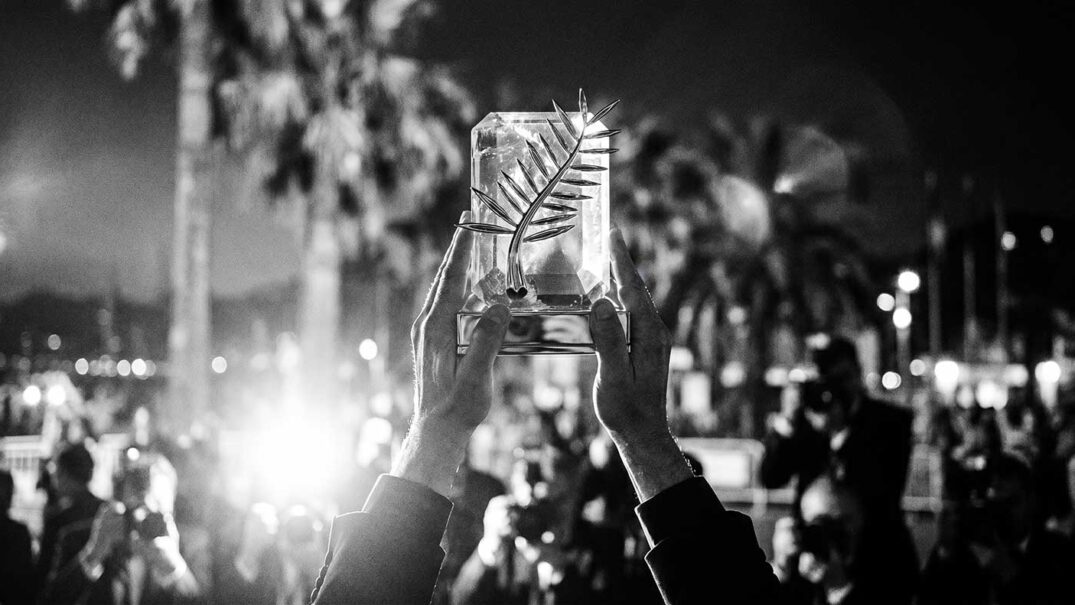
The most important signal came with the Palme d’Or. Cristian Mungiu’s Fjord, a Norway-set drama about a Romanian religious family caught between cultural tradition, state intervention, parenting norms, and political polarization, became the defining film of the festival. Its victory was not just another auteur triumph. It felt like Cannes choosing moral discomfort over easy consensus.
That matters.
Because global culture is increasingly organized around simplified positions: good and bad, victim and villain, progressive and reactionary, visible and erased. Fjord appears to exist in the space those categories cannot fully contain. It asks what happens when empathy becomes a slogan but not a practice — when societies speak fluently about inclusion, yet still struggle to understand people who do not reflect their own values.
In that sense, Cannes 2026 revealed a world exhausted by certainty.
The Grand Prix going to Andrey Zvyagintsev’s Minotaur, a Russian domestic thriller shadowed by the war in Ukraine, extended that atmosphere of political unease. The festival’s major films seemed less interested in escape than in pressure: families under ideological strain, bodies trapped inside institutions, private lives invaded by history.
A Different Kind of Cannes
Even the absence of Hollywood became part of the story.
Cannes has always balanced art cinema with the gravitational pull of American celebrity. But this year, major Hollywood studio presence felt noticeably reduced, leaving the festival more exposed, more European, more auteur-driven, and perhaps more honest about where cinema’s cultural authority now resides.
That absence did not make Cannes smaller. It made its identity clearer.
The Future Beyond the Screen
Without the usual machinery of blockbuster glamour dominating the conversation, other signals became easier to see: Rwanda’s Ben’Imana winning the Caméra d’Or, marking a major moment for emerging African cinema; Sandra Wollner’s Everytime taking the top Un Certain Regard prize; and the Immersive Competition honoring Ugo Arsac’s Katàbasis, a reminder that cinema’s future may no longer belong only to the traditional screen.
This was Cannes as a map of fragmentation.
Old cinema was present. New cinema was arriving. Hollywood was quieter. Europe was anxious. Africa was rising. Immersive storytelling was no longer a side curiosity. The festival seemed to suggest that the future of moving images will not be defined by one center, one language, one industry, or one format.
It will be unstable, hybrid, global, and morally uncomfortable.
Why Cannes Still Matters
That is why Cannes still matters.
Not because it always predicts the future perfectly. It does not. Not because it is free from vanity, hierarchy, or self-mythology. It is not. Cannes remains glamorous, absurd, elitist, seductive, and deeply theatrical. But like all enduring cultural rituals, it reveals the fears and desires of the world that gathers around it.
In 2026, what it revealed was a global culture losing faith in simplicity.
The most urgent films were not asking audiences to agree. They were asking them to sit longer with contradiction. To watch people they may not like. To consider systems they may distrust. To recognize that identity, morality, nationhood, family, technology, and art are no longer stable categories — if they ever were.
By the end of the festival, the Croisette had returned to itself. The carpets were rolled away. The yachts drifted back into luxury silence. The industry moved on to the next market, the next premiere, the next campaign.
But Cannes had already done what Cannes does best.
It turned cinema into a warning.
And the warning was clear: the world is not becoming easier to read.
It is becoming harder to look away from.